Know the Story
History & Culture
Explore Indigenous history, Black history, civil-rights landmarks, state history, museums, and arts across North Carolina.
Across the state
Explore the listings
97 results
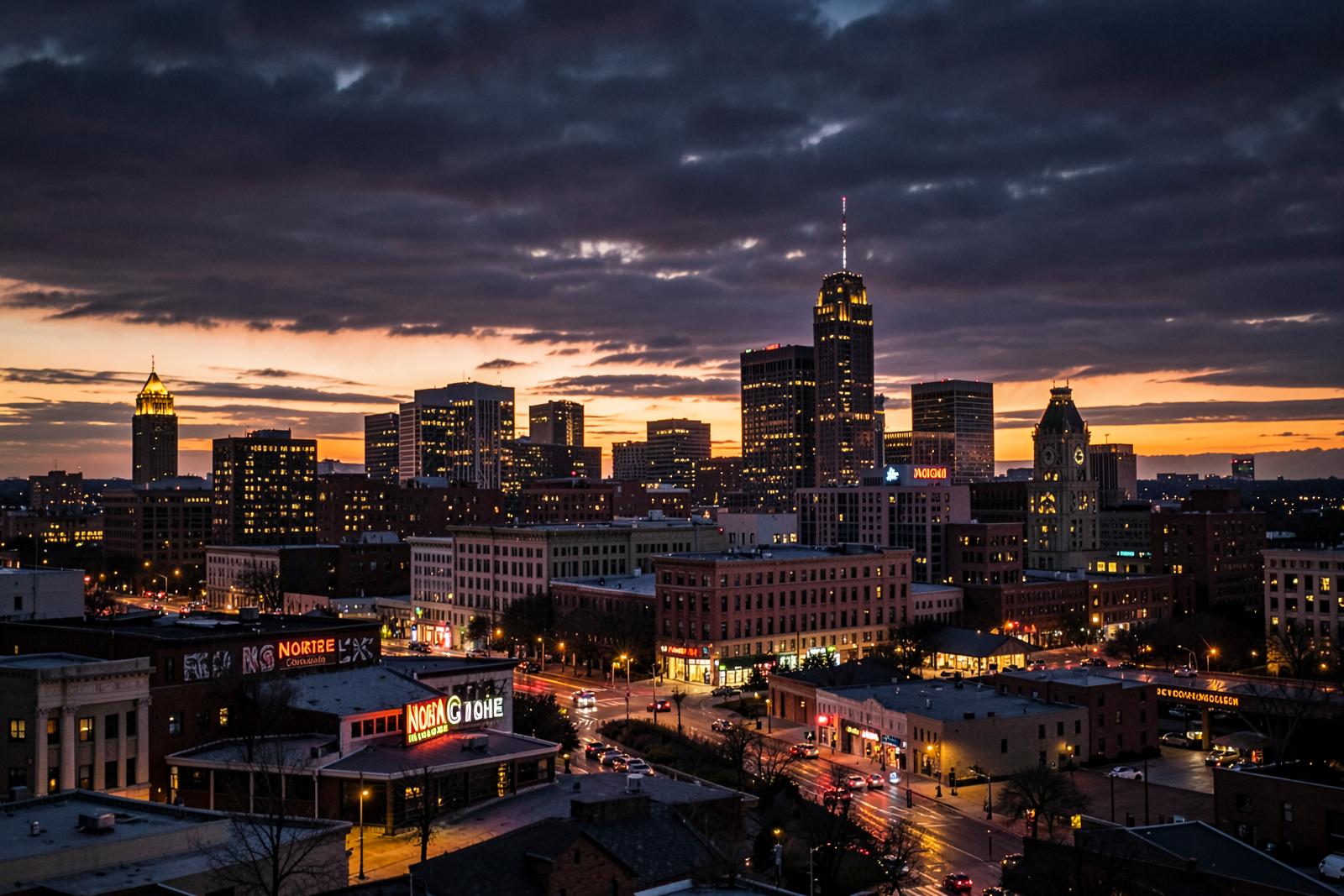
State & local history · Raleigh
A planned capital
Raleigh was selected as North Carolina’s permanent capital in 1792 and built around Union Square, now home to the State Capitol.
State & local history · Raleigh
Growth and reinvention
Government, higher education, research, and technology have successively shaped the city’s growth while older neighborhoods preserve earlier chapters.
Black history & culture · Raleigh
Shaw University
Founded in 1865, Shaw is among the nation’s earliest HBCUs; Estey Hall was built for the higher education of Black women.
Black history & culture · Raleigh
Saint Augustine’s legacy
Saint Augustine’s University and its historic campus reflect Raleigh’s long role in Black education and civic leadership.
Black history & culture · Raleigh
South Park and East Raleigh
Historic neighborhoods southeast of downtown hold generations of Black institutions, churches, homes, and community memory.
Arts & culture · Raleigh
North Carolina Museum of Art
Statewide collections meet large-scale outdoor installations.
Arts & culture · Raleigh
Contemporary Art Museum Raleigh
CAM connects contemporary exhibitions with the Warehouse District.
Arts & culture · Raleigh
Performing arts
Memorial Auditorium and downtown stages support theater, dance, and music.
Museum · Raleigh
North Carolina Museum of Art
Free general admission plus a 164-acre park with trails and outdoor art west of downtown.
Museum · Raleigh
North Carolina Museum of History
State history galleries sit on the downtown government campus.
Museum · Raleigh
North Carolina Museum of Natural Sciences
The Southeast’s largest natural-sciences museum, free to enter, faces Bicentennial Plaza.
Museum · Raleigh
Contemporary Art Museum Raleigh
CAM presents rotating contemporary exhibitions in the Warehouse District.
Museum · Raleigh
Marbles Kids Museum
Hands-on galleries and an IMAX theater anchor the children’s museum downtown.
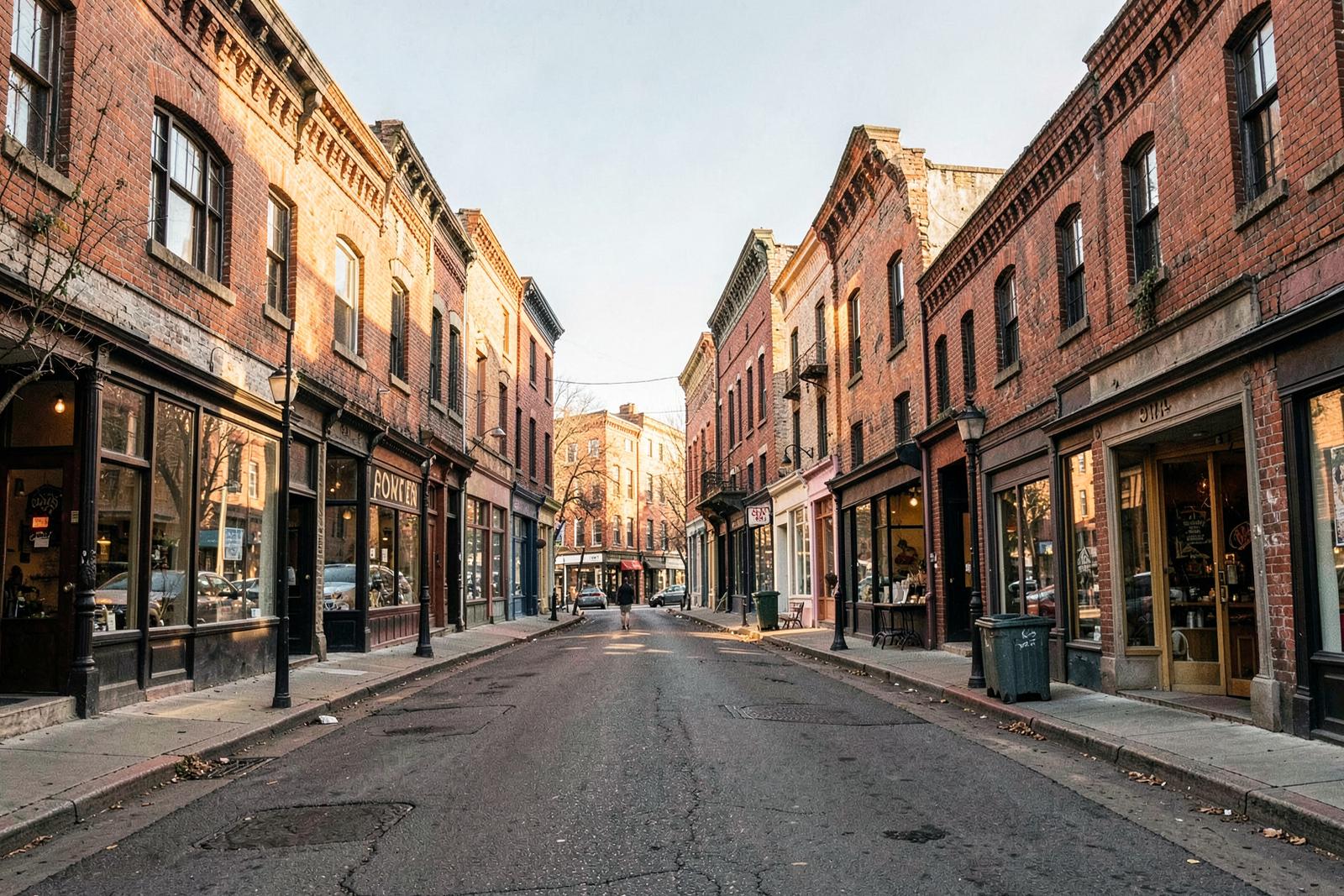
State & local history · Durham
Tobacco and textiles
Tobacco manufacturing powered Durham’s industrial rise and left a landscape of brick factories now adapted to new uses.
State & local history · Durham
A new economy
Medicine, research, technology, education, and entrepreneurship now share the city with its industrial inheritance.
Black history & culture · Durham
Black Wall Street
Parrish Street became nationally known for Black finance and enterprise, including North Carolina Mutual and Mechanics and Farmers Bank.
Black history & culture · Durham
Hayti
The post-Civil War community grew into a center of Black business, education, worship, and culture before urban renewal disrupted it.
Black history & culture · Durham
North Carolina Central University
Founded by Dr. James E. Shepard, NCCU is a central institution in Durham’s Black intellectual and cultural life.
Arts & culture · Durham
Hayti Heritage Center
A home for performance, film, visual art, and Black cultural memory.
Arts & culture · Durham
Durham Performing Arts Center
A major touring theater venue downtown.
Arts & culture · Durham
Full Frame
Durham is closely associated with documentary film through the Full Frame festival and community.
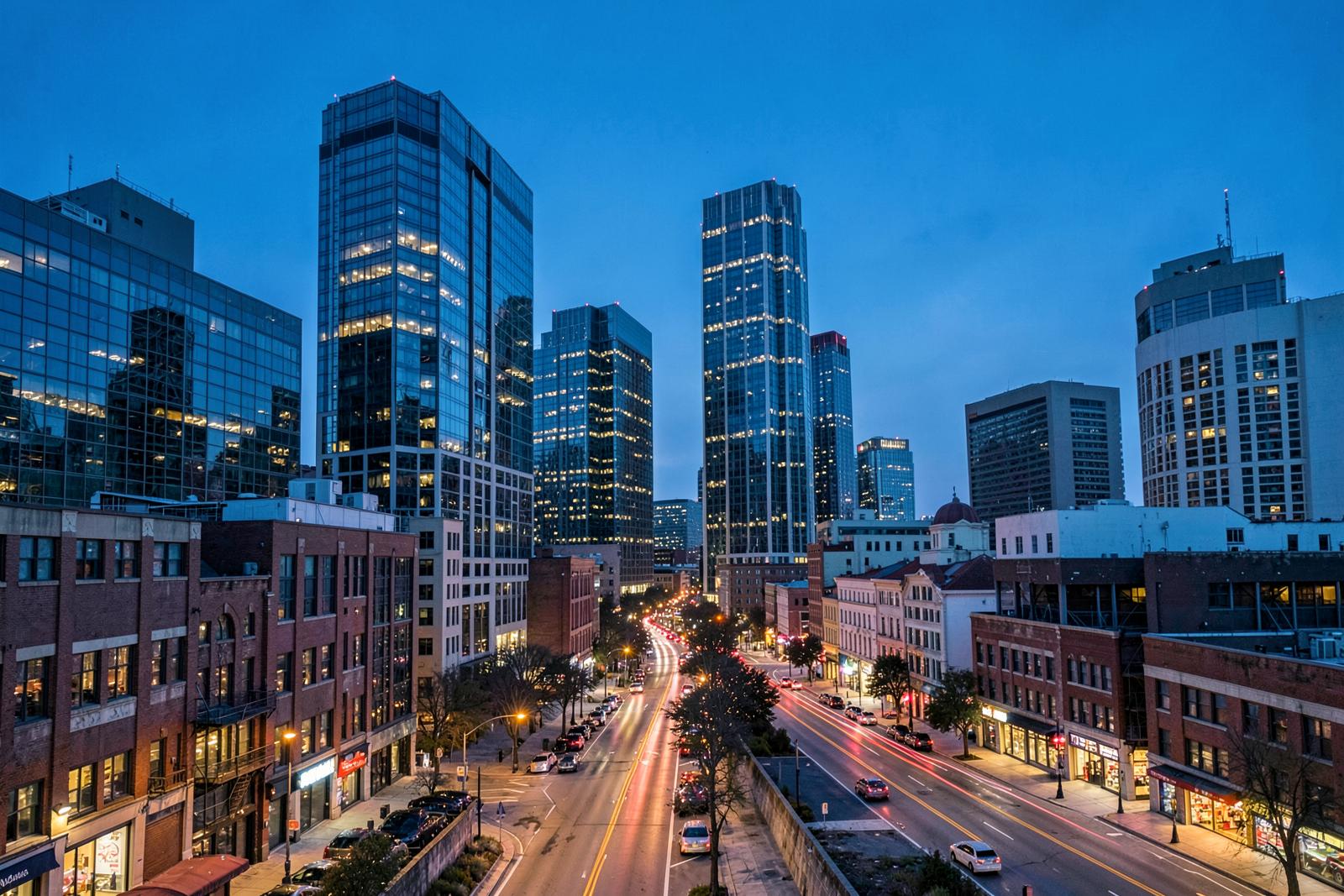
State & local history · Charlotte
Trade to banking
A regional trading center grew through rail, textiles, and finance into North Carolina’s largest city.
State & local history · Charlotte
A changing skyline
Bank consolidation and sustained migration transformed Uptown and the wider metropolitan region.
Black history & culture · Charlotte
Historic West End
The area around Johnson C. Smith University and Beatties Ford Road remains central to Black Charlotte.
Black history & culture · Charlotte
Brooklyn remembered
Urban renewal displaced a major Black neighborhood and business district in Second Ward.
Black history & culture · Charlotte
Harvey B. Gantt Center
The center presents art, history, and culture of African-descended people.
Arts & culture · Charlotte
Harvey B. Gantt Center
A defining institution for African-American art and culture.
Arts & culture · Charlotte
Blumenthal Arts
Uptown stages host theater, dance, and touring performances.
Arts & culture · Charlotte
NoDa
Murals, galleries, and music venues sustain the district’s arts identity.
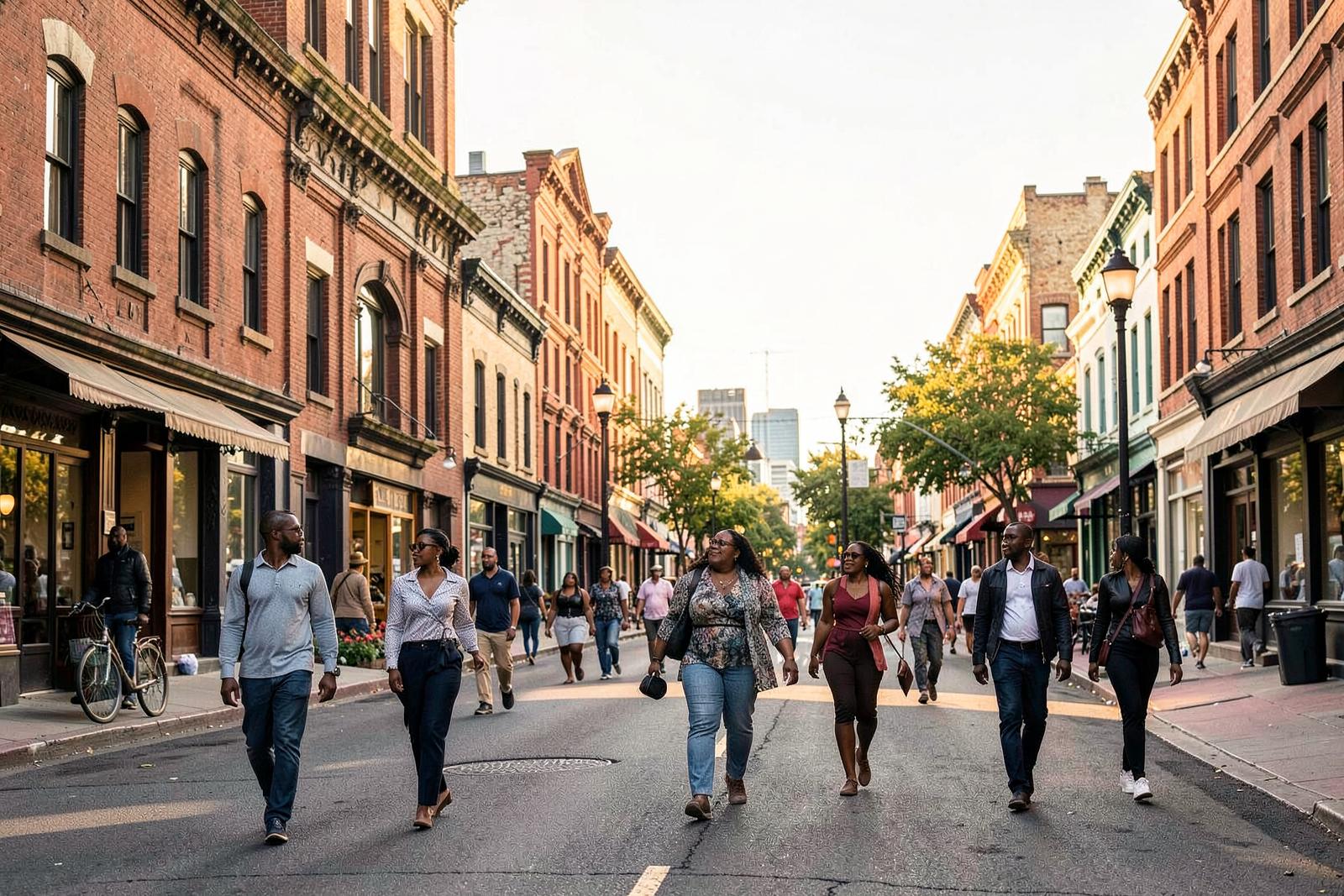
State & local history · Greensboro
A planned county seat
Greensboro was established in the early nineteenth century and named for Revolutionary War general Nathanael Greene.
State & local history · Greensboro
Textiles and transportation
Rail access and manufacturing drove expansion across the twentieth century.
Black history & culture · Greensboro
The Greensboro Four
On February 1, 1960, four NC A&T freshmen began a sit-in at the segregated Woolworth lunch counter.
Black history & culture · Greensboro
NC A&T
The nation’s largest HBCU is a center of scholarship, engineering, agriculture, activism, and Aggie tradition.
Black history & culture · Greensboro
Civil Rights Center
The former Woolworth now houses the International Civil Rights Center & Museum.
Arts & culture · Greensboro
Weatherspoon Art Museum
A free university museum with a strong modern collection.
Arts & culture · Greensboro
Carolina Theatre
A historic downtown performing-arts venue.
Arts & culture · Greensboro
Elsewhere
An internationally known experimental art environment.
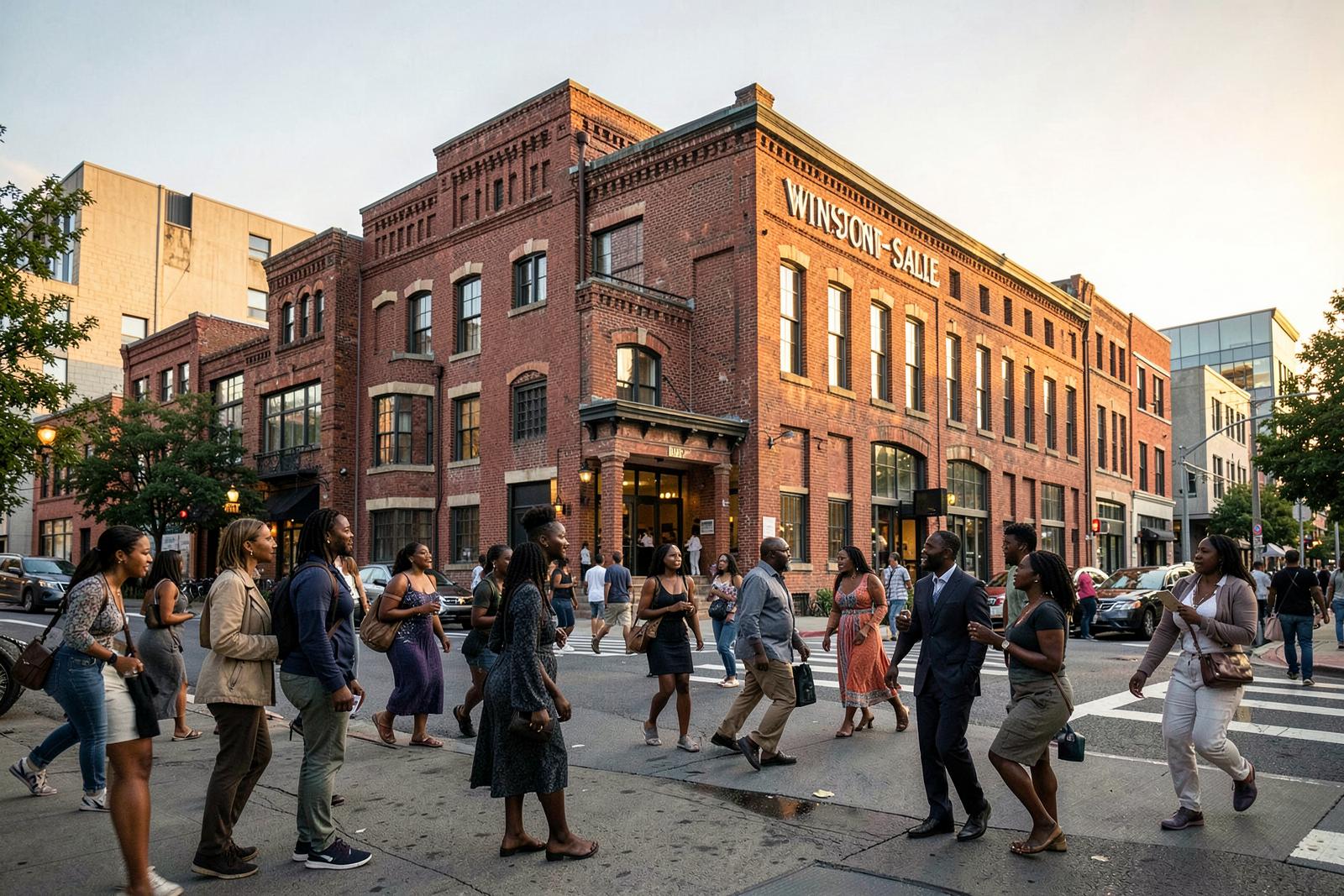
State & local history · Winston-Salem
Salem and Winston
Moravians established Salem in the eighteenth century; industrial Winston grew beside it, and the municipalities consolidated in 1913.
State & local history · Winston-Salem
Tobacco city
Manufacturing shaped the skyline, workforce, philanthropy, and neighborhoods for generations.
Black history & culture · Winston-Salem
Winston-Salem State University
Founded by educator Simon Green Atkins in 1892, WSSU anchors Black academic and cultural life.
Black history & culture · Winston-Salem
Happy Hill
One of the city’s oldest Black communities carries a long history of family, faith, and neighborhood advocacy.
Black history & culture · Winston-Salem
Delta Arts Center
The center advances Black visual art and cultural programming in the Triad.
Arts & culture · Winston-Salem
Delta Arts Center
A key home for African-American visual arts.
Arts & culture · Winston-Salem
SECCA
The Southeastern Center for Contemporary Art presents changing exhibitions.
Arts & culture · Winston-Salem
UNCSA
The conservatory adds film, dance, music, theater, and design to city life.
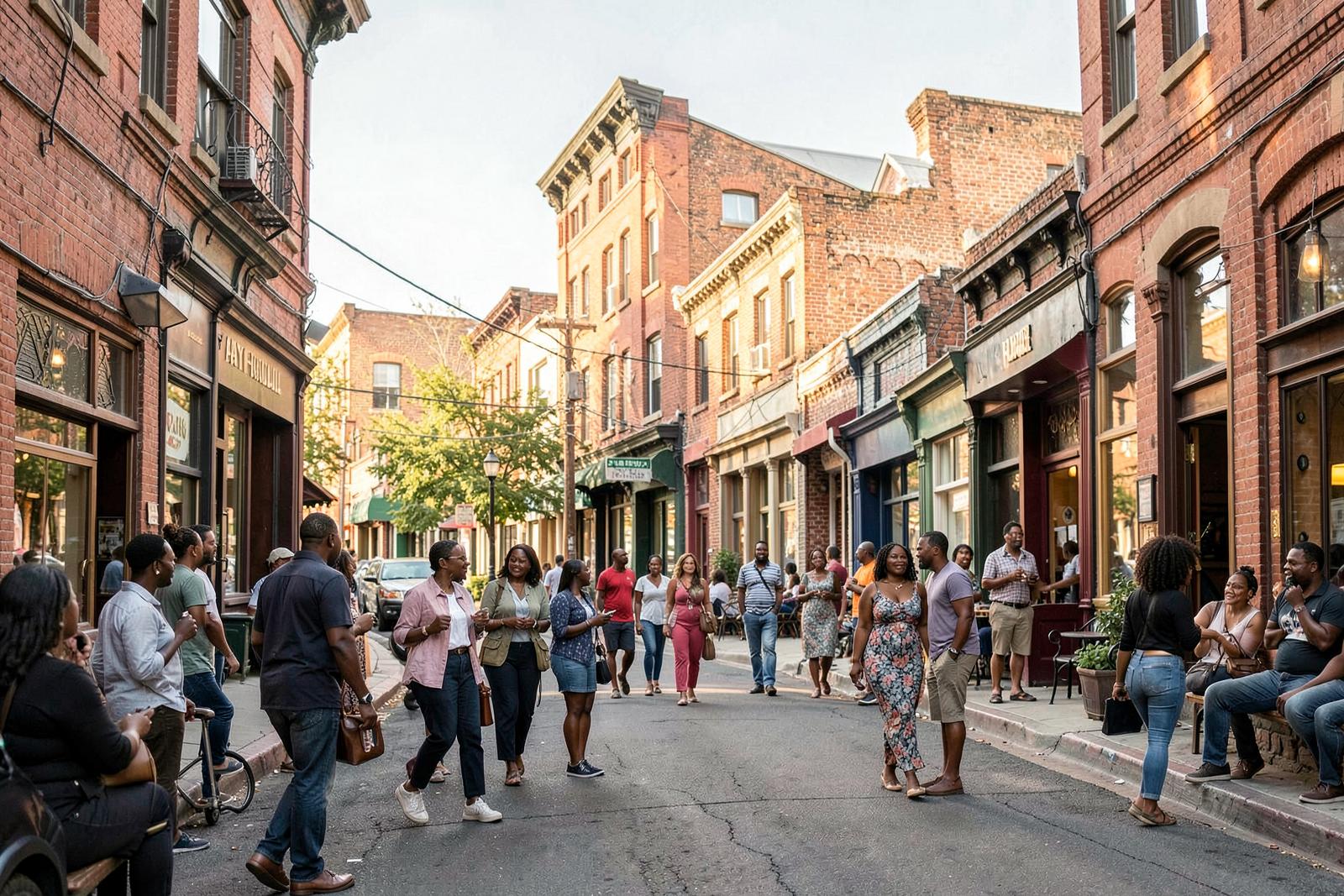
State & local history · Fayetteville
Two towns become Fayetteville
Campbellton and Cross Creek united in the eighteenth century and took the name Fayetteville.
State & local history · Fayetteville
Military transformation
The nearby Army installation reshaped the city’s population, economy, and global connections through the twentieth century.
Black history & culture · Fayetteville
Fayetteville State University
The institution traces to the Howard School, founded in 1867, and became one of North Carolina’s public HBCUs.
Black history & culture · Fayetteville
Murchison Road
The corridor connects FSU, Black enterprise, churches, neighborhoods, and generations of city life.
Black history & culture · Fayetteville
A global Black community
Military migration has connected Fayetteville’s Black community to the Caribbean, Africa, Europe, and Asia.
Arts & culture · Fayetteville
Cape Fear Regional Theatre
A long-running professional theater serves the region.
Arts & culture · Fayetteville
Arts Council of Fayetteville/Cumberland County
Downtown programs support public art and local creators.
Arts & culture · Fayetteville
FSU arts
University galleries and performances add an important Black cultural platform.
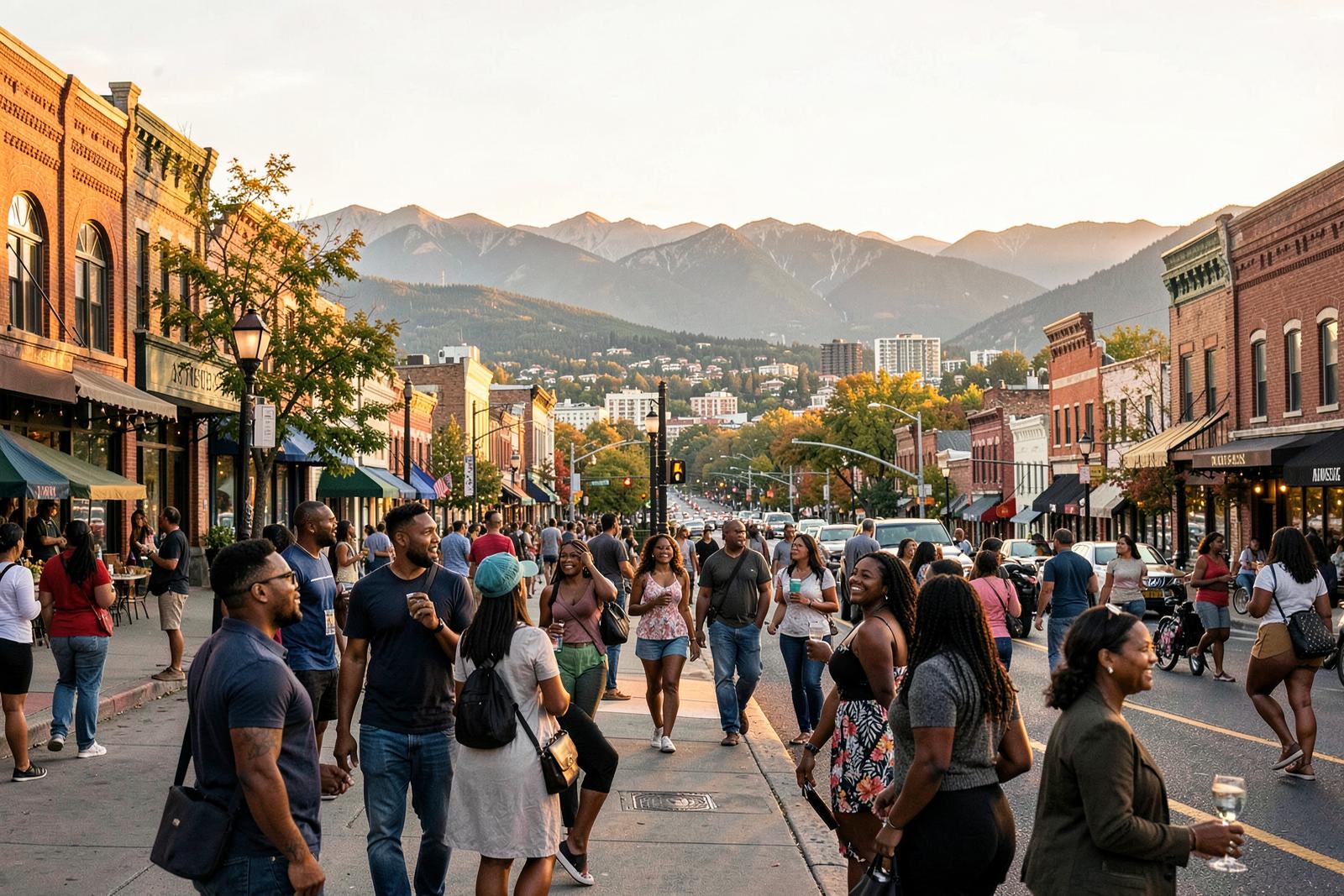
State & local history · Asheville
Mountain crossroads
A regional trading center expanded rapidly after the railroad arrived in the nineteenth century.
State & local history · Asheville
Boom, bust, and preservation
A 1920s building boom and long debt repayment helped preserve much of downtown’s architecture.
Black history & culture · Asheville
YMI Cultural Center
Founded in 1893, the YMI became a central institution for Asheville’s Black community.
Black history & culture · Asheville
The Block
The downtown district around Eagle and Market streets historically concentrated Black business and culture.
Black history & culture · Asheville
East End/Valley Street and Southside
These communities hold deep histories of Black homeownership, faith, commerce, displacement, and resilience.
Arts & culture · Asheville
YMI Cultural Center
Exhibitions and programs connect history with contemporary Black creativity.
Arts & culture · Asheville
River Arts District
Hundreds of artists work across a broad studio district.
Arts & culture · Asheville
The Orange Peel
A nationally known live-music room anchors downtown nightlife.
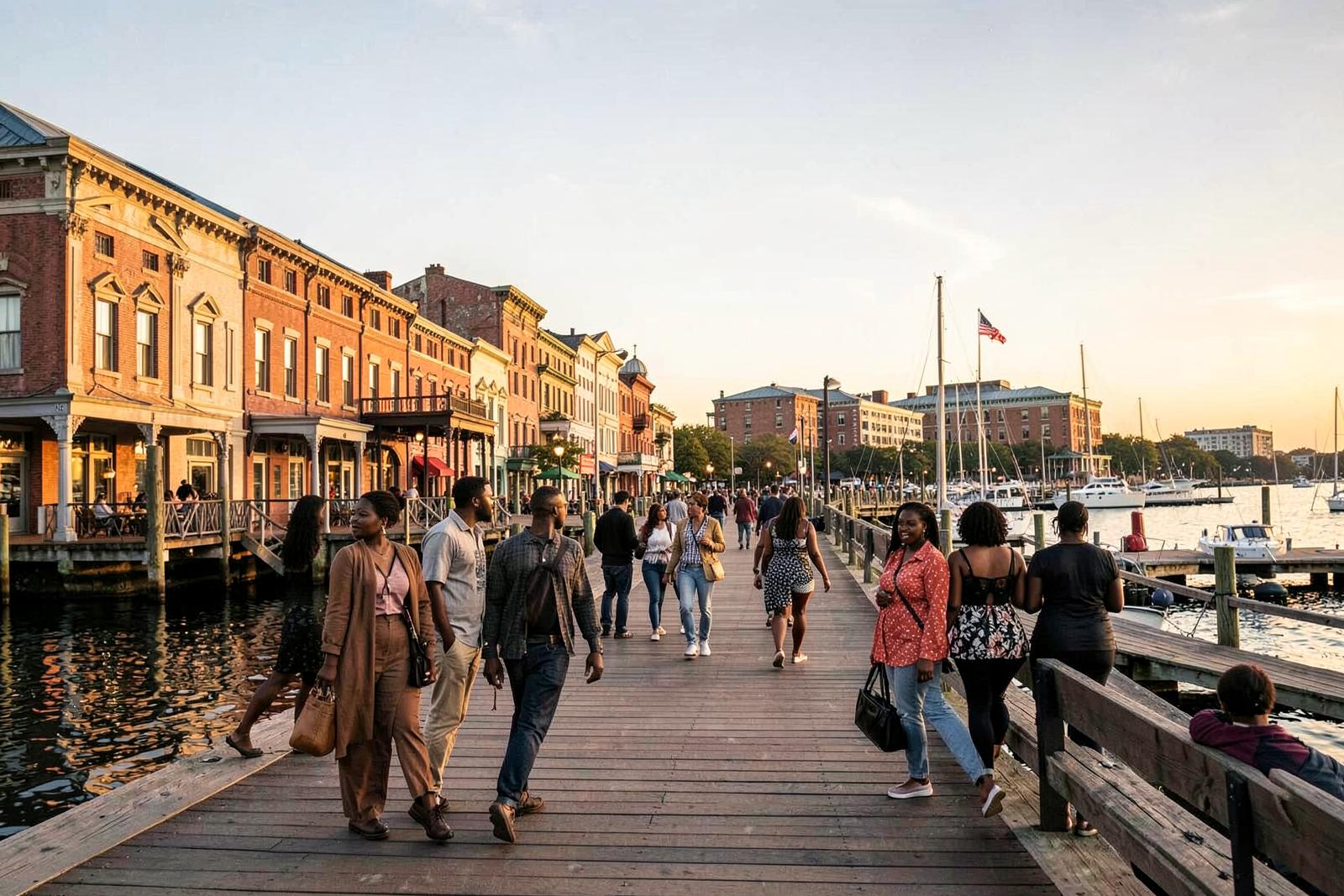
State & local history · Wilmington
Port on the Cape Fear
River trade, rail, naval stores, and maritime industries drove Wilmington’s growth.
State & local history · Wilmington
1898
White supremacists overthrew the elected biracial city government on November 10, 1898, in the only successful coup d’état in United States history.
Black history & culture · Wilmington
1898 Memorial Park
The memorial honors the people and community targeted by the Wilmington coup.
Black history & culture · Wilmington
Black enterprise before 1898
Wilmington had a substantial Black professional, political, and business class before the attack.
Black history & culture · Wilmington
Williston legacy
Williston Industrial High School and its alumni hold an important place in Black education and civic life.
Arts & culture · Wilmington
Cameron Art Museum
Regional history and contemporary art meet in changing exhibitions.
Arts & culture · Wilmington
Brooklyn Arts District
Performance and creative spaces occupy historic buildings.
Arts & culture · Wilmington
Film community
Production work supports actors, crew, and visual storytellers across the region.
State & local history · Cary
Indigenous homelands
The wider Piedmont was home to Indigenous peoples long before European settlement; local interpretation should begin with that longer history.
State & local history · Cary
Railroad crossroads
The community grew around a nineteenth-century rail junction and was incorporated in 1871.
State & local history · Cary
Regional growth
Research Triangle Park and the wider technology economy accelerated Cary’s late-twentieth-century expansion.
Black history & culture · Cary
Shared Triangle history
Cary’s Black history is connected to rural Wake County communities, churches, schools, and migration across the Triangle.
Black history & culture · Cary
Contemporary community
Black residents, entrepreneurs, artists, and civic groups are part of the town’s increasingly diverse identity.
Arts & culture · Cary
Cary Arts Center
A repurposed historic school supports performance and visual arts.
Arts & culture · Cary
The Cary Theater
The restored downtown theater presents film, music, and community programs.
Museum · Cary
Page-Walker
Local history and rotating exhibitions occupy the historic railroad hotel.
Museum · Cary
Cary Arts Center
Classes, galleries, and performances animate a restored school.
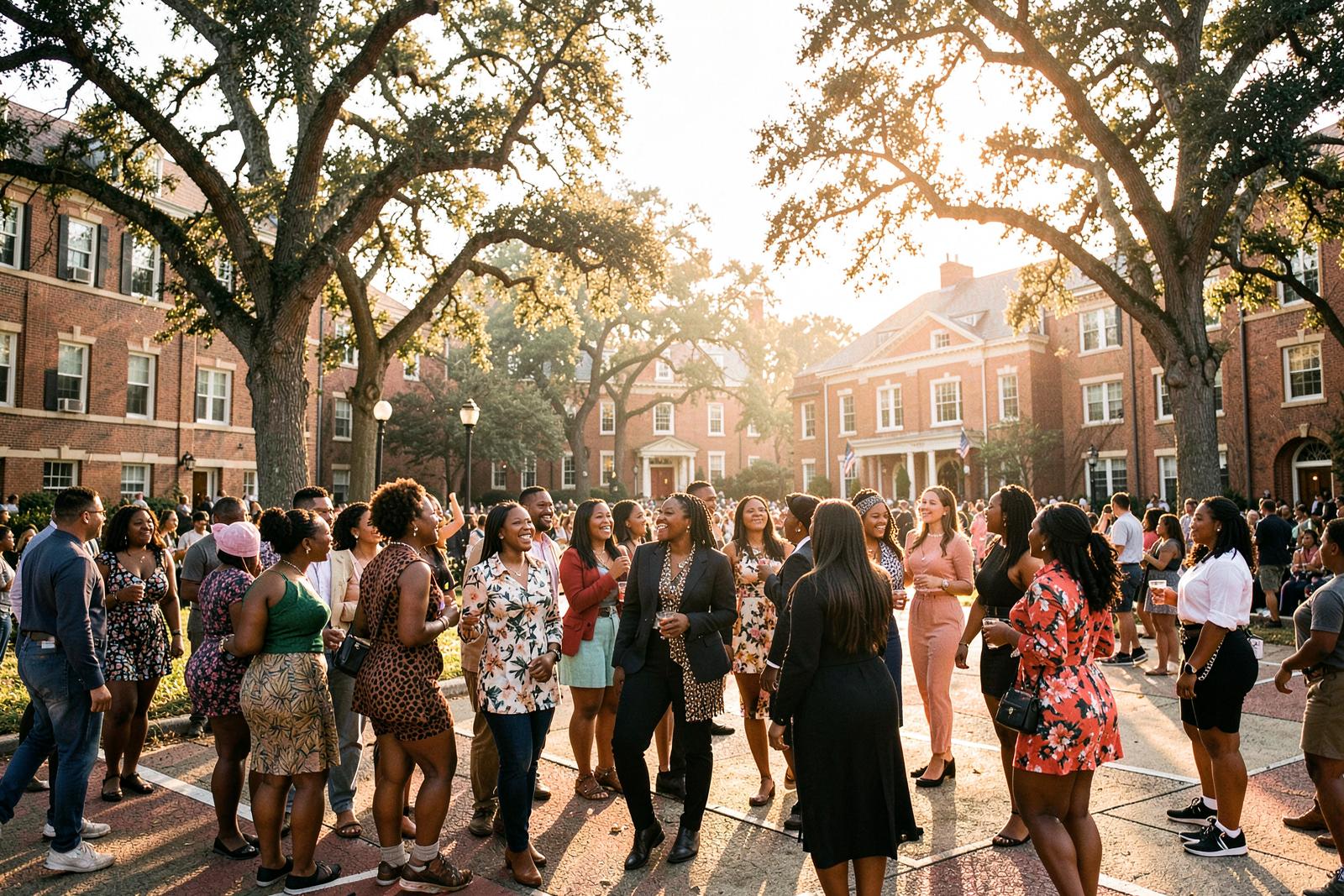
State & local history · Chapel Hill
Indigenous Piedmont
Indigenous peoples lived across this region for millennia before colonial settlement.
State & local history · Chapel Hill
University town
The town developed around the University of North Carolina, chartered in 1789.
State & local history · Chapel Hill
Civil rights
Local Black students and residents organized against segregation in businesses and public life.
Black history & culture · Chapel Hill
Northside
A historic Black neighborhood shaped by university workers, churches, educators, and community organizing.
Black history & culture · Chapel Hill
Pine Knolls
The neighborhood carries an important history of Black homeownership and civic life.
Black history & culture · Chapel Hill
Freedom movement
Chapel Hill’s sit-ins and demonstrations belong in the wider North Carolina civil-rights story.
Arts & culture · Chapel Hill
Ackland Art Museum
A free museum presents global collections and exhibitions.
Arts & culture · Chapel Hill
PlayMakers Repertory Company
Professional theater is based on the UNC campus.
Museum · Chapel Hill
Ackland
The university art museum is open to the public.
Museum · Chapel Hill
Morehead
The planetarium connects science history with public programming.
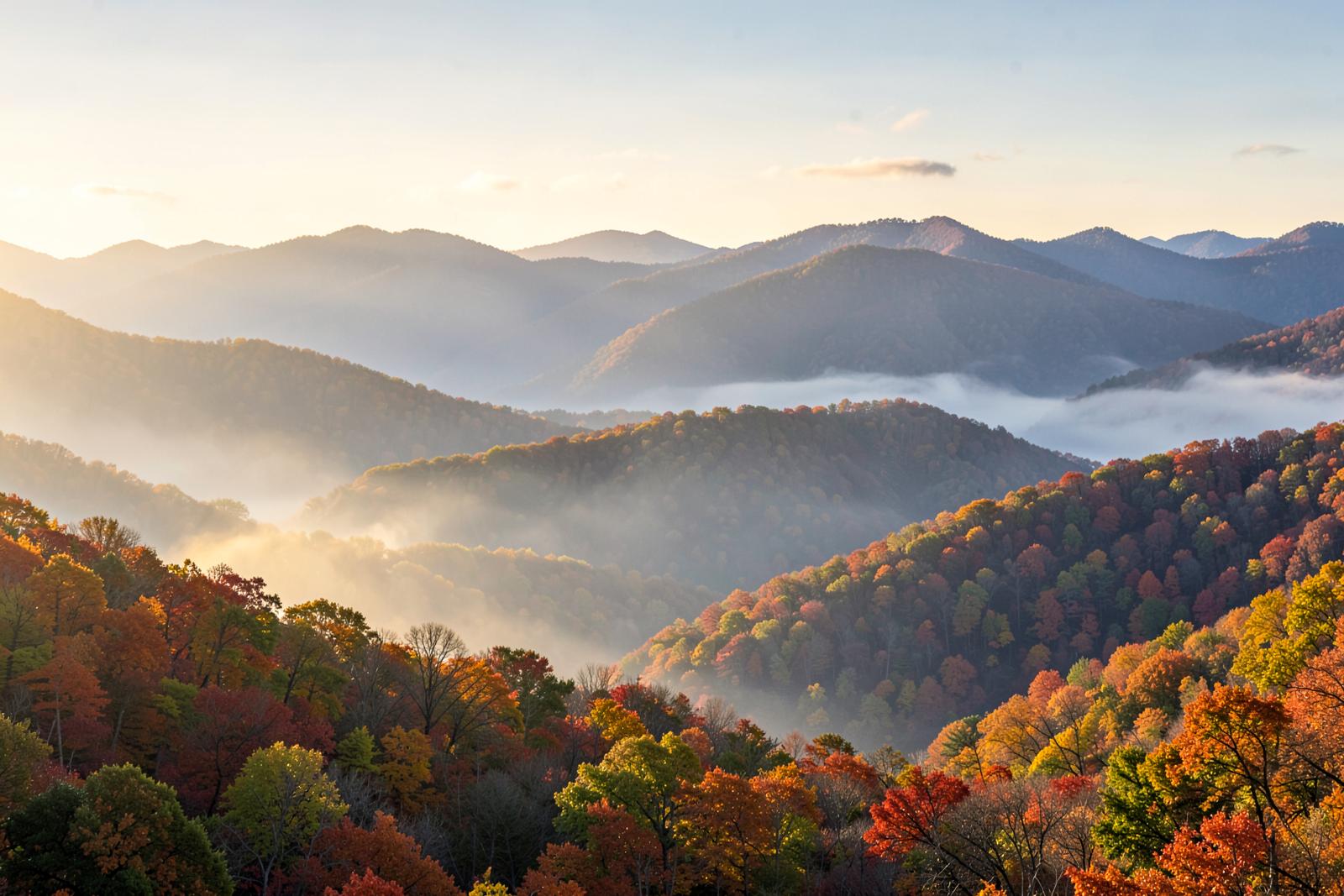
State & local history · Asheboro
Indigenous region
The Uwharrie and Piedmont landscapes carry Indigenous history predating European settlement.
State & local history · Asheboro
County seat
Asheboro was established as Randolph County’s seat near the end of the eighteenth century.
State & local history · Asheboro
Manufacturing economy
Textiles, furniture, hosiery, and later diversified manufacturing shaped local growth.
Black history & culture · Asheboro
Community institutions
Black churches, schools, families, and businesses form an essential part of Asheboro and Randolph County history.
Black history & culture · Asheboro
Editorial work ahead
Drake is developing sourced reporting on local Black civic and business history rather than publishing unverified names.
Arts & culture · Asheboro
Sunset Theatre
The historic downtown theater hosts community arts programming.
Arts & culture · Asheboro
Local makers
Pottery, craft, and visual art connect Asheboro to the wider Randolph County tradition.
Museum · Asheboro
Aviation Museum
Aircraft and memorabilia document regional aviation.
Museum · Asheboro
Randolph County history
Check local institutions for current exhibitions and access.
North Carolina, in your inbox every Thursday.
New stories, weekend plans, business openings and the things we hear before they get posted.